Rome is full of art treasures. Grand buildings from every stage of history, churches full of statues and other artworks, and much, much more. So it would be easy to miss the Villa Farnesina. I discovered it by chance, passing it on an early morning walk through the Trastevere area of the city. It was a lucky find, a small but perfect villa jam-packed with frescoes by Raphael and other Renaissance masters.
A Grand Renaissance Villa
The Villa Farnesina was built as a summer house for Agostino Chigi, a wealthy banker and treasurer to Pope Julius II. He chose a location away from the city, on the opposite side of the River Tiber: in the 16th century this would have been a relatively open suburban area. The architect was Baldazarre Peruzzi, who filled the house with his own work and that of other contemporary artists, most notably Raphael.
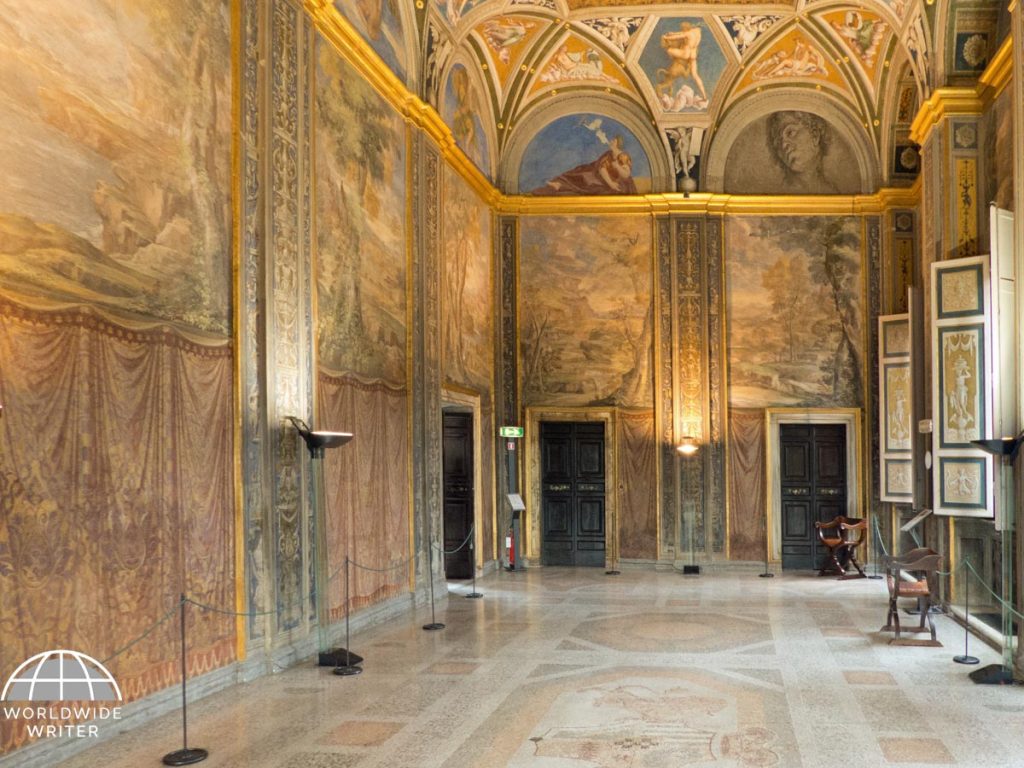
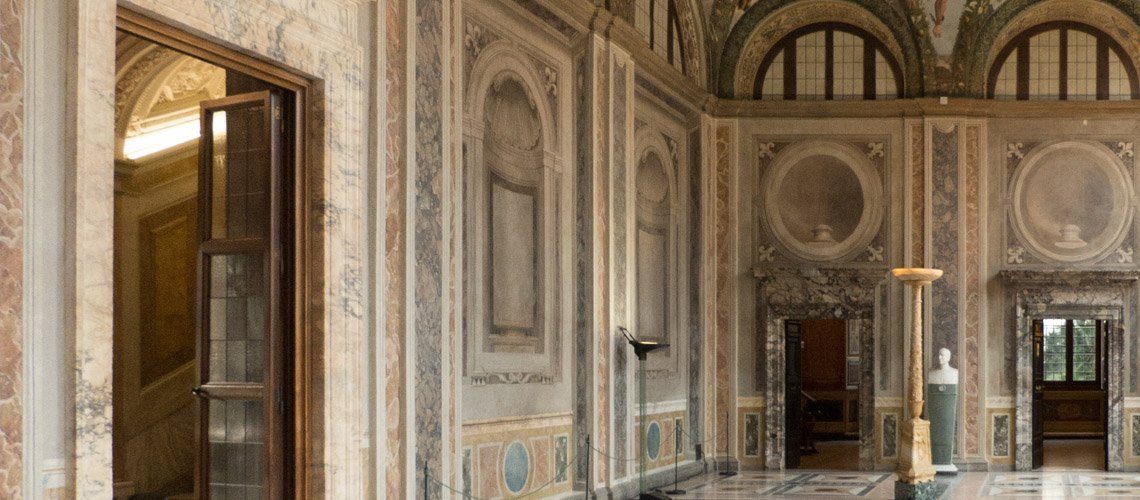
The paintings are part of the fabric of the villa. Every square inch seems to be covered with artwork, from the frescoes on the walls, to the ornate friezes, to the richly decorated ceilings. No wall is left blank; the spaces between pictures are filled with painted drapery. And, if you look carefully at the stairway, you will see that it is a construction of many different types of marble.
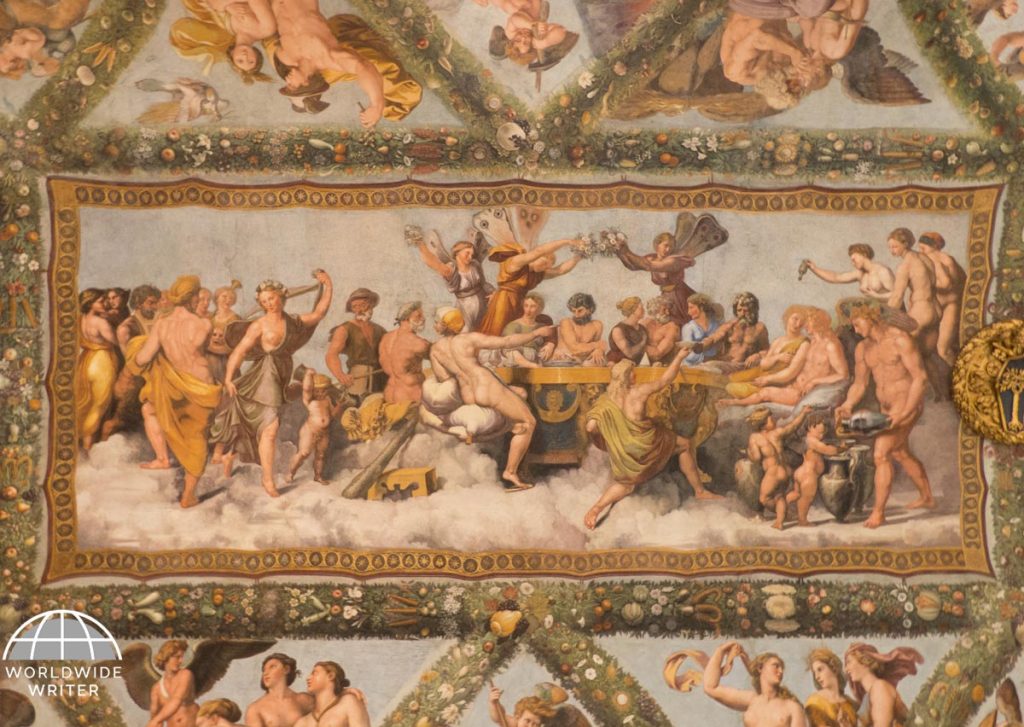
Frescoes Of The Villa Farnesina
The main downstairs room is the loggia, originally an open space and the main entrance to the house. The paintings in this room have mythological themes. The fresco on the ceiling was designed by Raphael, although mostly painted by his students. It represents the marriage of Cupid and Psyche, and is surrounded by opulent images of flowers and fruits.
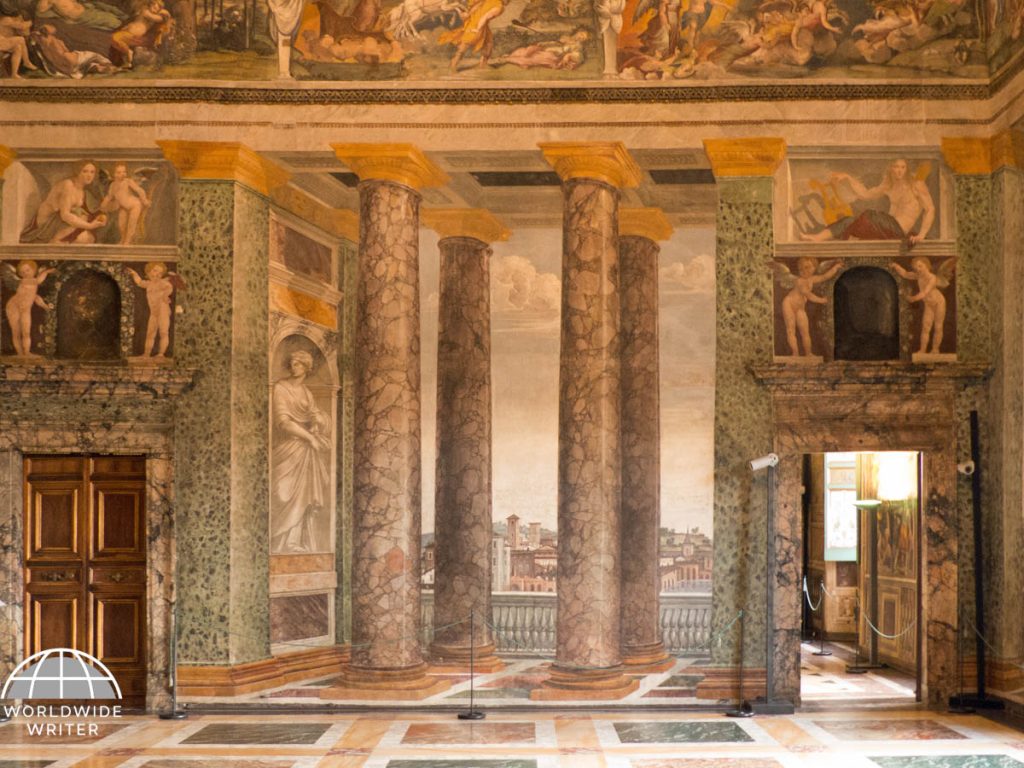
Upstairs is the remarkable Perspective Room. The architect Peruzzi designed this himself, with trompe-l’oeil frescoes of pillars and Roman countryside. At first glance you could imagine that you were standing in an open courtyard looking out to a 16th century landscape.
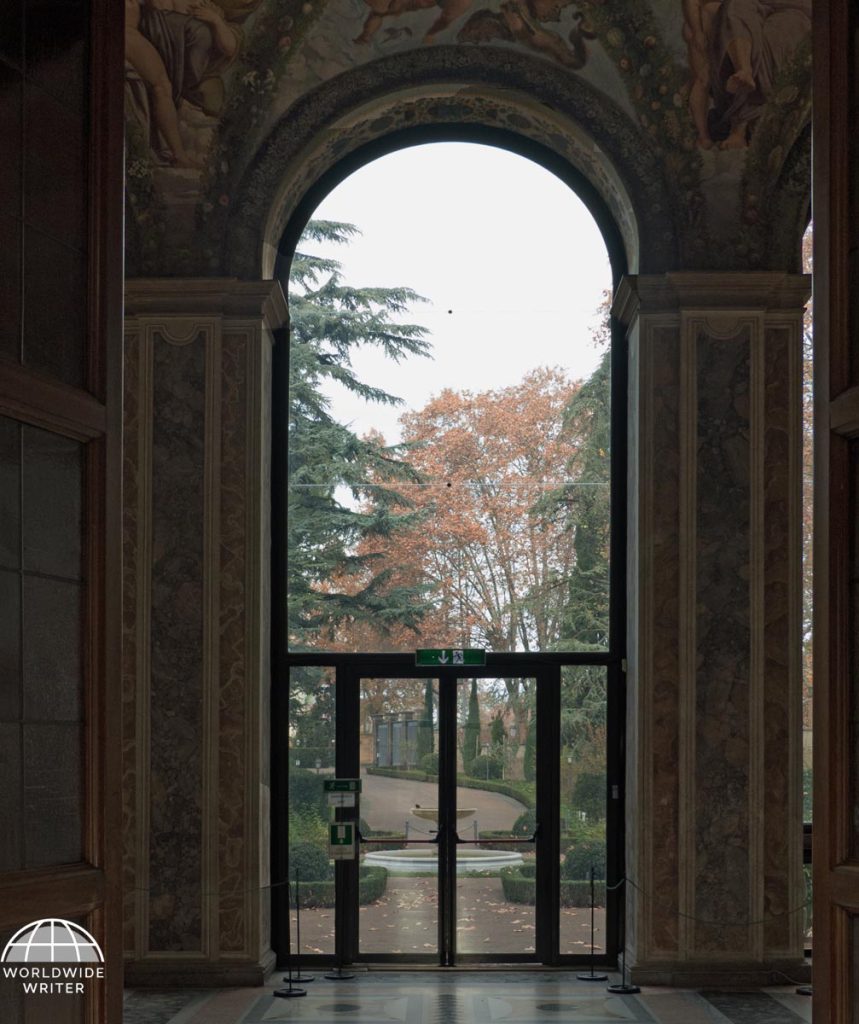
As you walk round the house you get glimpses of the gardens. Unfortunately I didn’t manage to explore the grounds (they can only be seen on a guided tour). However, I was able to walk around the small patch beside the entrance. It was laid out in the classical style, with low geometric hedges and different types of citrus trees. It is only to be expected that the gardens of the Villa Farnesina would be a work of art in themselves.
Visiting The Villa Farnesina
- The Villa Farnesina is open from Monday to Saturday, and on the second Sunday of each month.
- The villa is on Via della Lungara, in the Trastevere district. It is approximately 25 minutes’ walk from central Rome: there is no metro station nearby, but buses are available.
- It is recommended to purchase tickets in advance. If you want to learn more about the house and its frescoes it is worth taking a private tour with a local guide.